How to Grow Peppers in Containers
Capsicums are heavy feeders, and most of the internet’s advice about them is wrong. I ignored the standard “go easy on the fertilizer” line last season and fed mine hard the whole way through. Best crop I’ve ever had off a balcony. Turns out peppers want more food than the cautious advice gives them credit for, not less.
That’s the theme of growing peppers in a pot generally: they’re one of the lower-maintenance fruiting vegetables you can grow in a container, right up until you underfeed or underwater them, at which point they sulk quietly instead of telling you loudly the way a cucumber does. Here’s the full setup.
Choosing a Variety and Starting
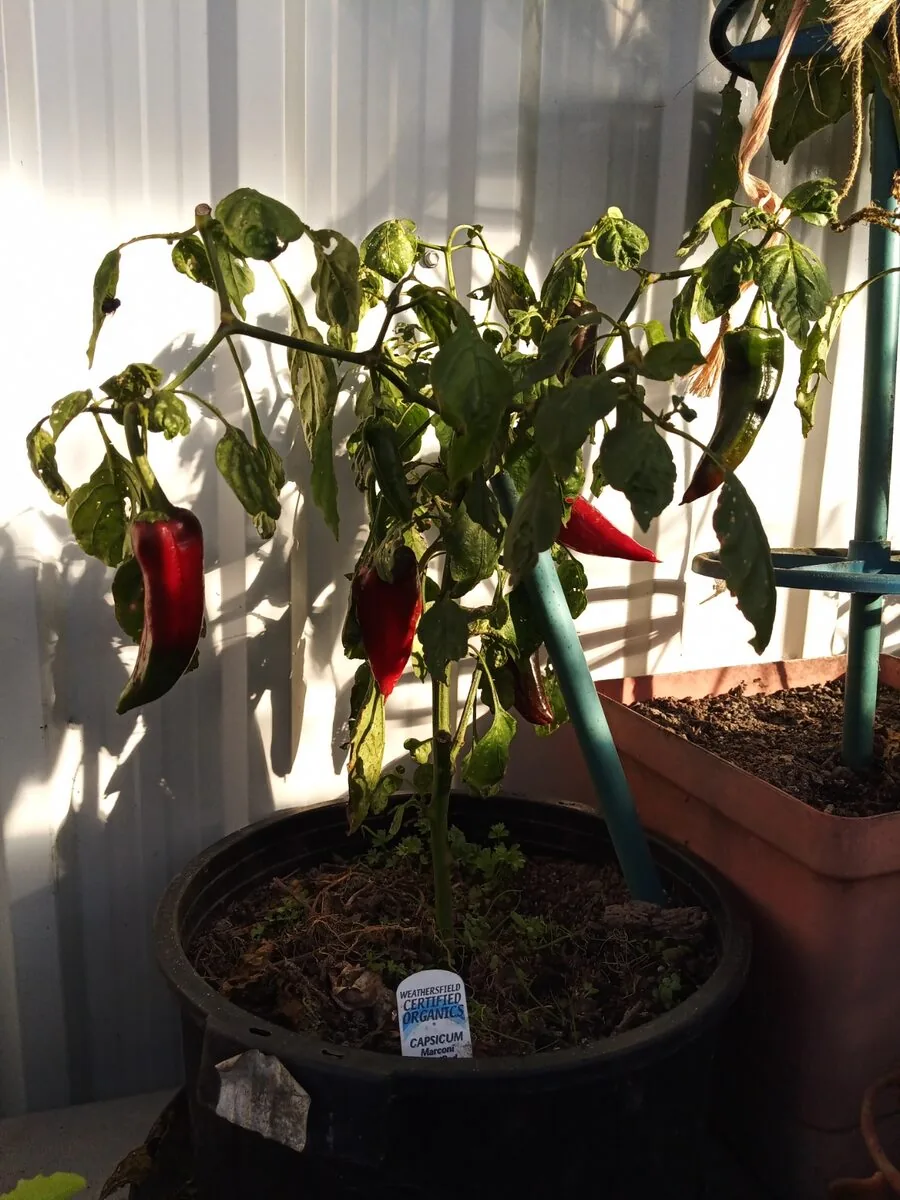
Both sweet peppers (bell, banana, shishito) and hot peppers (jalapeño, habanero, cayenne) do well in containers, and neither needs as much room as a tomato or cucumber. Compact or dwarf varieties bred for pots (Patio Pepper, Redskin, Numex Twilight) stay smaller and often start fruiting sooner than a full-size garden variety squeezed into a pot.
Start from a seedling if your local garden center has one. Peppers are slow starters from seed, often 8-10 weeks to a plantable seedling, so buying one already a few weeks in gets you a harvest this season instead of running out of growing season waiting on seed, especially if you’re starting later than early spring.
Grow 1 plant per pot, same as any other fruiting vegetable in a container. Peppers don’t sprawl the way cucumbers do, so a slightly narrower pot works, but the roots still want the space to themselves.
Pot Size and Depth
Peppers need less room than tomatoes or cucumbers, which is one of the reasons they’re a good next crop once you’ve got a container garden going. The balcony vegetable garden guide gives 3-4 gallons (10-15 liters) as the container size for peppers and beans, and about 3 gallons (12 liters) sits comfortably in that range for a single plant. A larger container beyond that minimum supports a bigger plant and heavier harvest, particularly for full-size, non-dwarf varieties, which want more root room than the compact dwarf types.
Drainage holes are non-negotiable, same as every container crop on this site. A saucer underneath catches runoff, but it needs emptying after watering, not left to sit.
If you’re growing other crops alongside your peppers, the pot-size cheat sheet covers 9 more by depth, from microgreens up to cherry tomatoes.
Light and Siting
Peppers want a lot of sun: 6-8 hours of direct light a day at minimum, more if you can give it. Your sunniest spot is the right spot. Skimp on light and you’ll get a leafy plant that never flowers, which is the single most common reason a balcony pepper plant produces nothing all season.
Unlike cucumbers, peppers don’t mind a bit of wind and don’t need the same shelter, which makes them a more forgiving choice for an exposed or high balcony. If your growing space is windy but sunny, peppers are a better bet than cucumbers for that exact spot.
Feeding
This is where most pepper advice undersells the plant. The cautious line you’ll read everywhere is to go easy on fertilizer so the plant doesn’t put all its energy into leaves instead of fruit. In practice, a container pepper fed on the same schedule as a balcony tomato, a balanced liquid feed every 2 weeks once established (4-6 weeks after planting), then a higher-potassium feed once flowering starts, produces more, not less. Container soil runs out of nutrients fast, and a pepper plant that looks like it’s “getting enough” on a light feeding schedule is usually just getting by.

Don’t take that as license to guess at doubling a labeled dose, follow the product’s rate and stick to the 2-week cadence. The point isn’t more fertilizer than the bottle says, it’s not skipping feeds out of an unfounded worry that peppers can’t handle regular feeding. They can.
Watering: Signs of Overwatering and Underwatering
Peppers are more forgiving than cucumbers on watering consistency, but they still show real signs when you get it wrong, and the signs are different enough from other fruiting crops that it’s worth knowing pepper’s specific tells rather than a generic “wilting means thirsty” rule.
Signs of overwatering pepper plants:
- Leaf drop, healthy-looking leaves falling for no obvious reason, often the first sign before anything looks visibly unwell
- Blossom drop, flowers falling before they set fruit
- Slow, gradual yellowing rather than the fast, dramatic wilt you’d see on an underwatered plant
- Soft stems at the soil line in advanced cases
Signs of underwatering:
- Leaves that curl or droop but recover within an hour of watering
- Dry, crumbly soil pulling away from the pot’s sides
- Slower growth and smaller fruit
- Flowers dropping here too, so blossom drop alone doesn’t tell you which direction the problem is in
How to tell them apart: check the soil, not the leaves. Push a finger in to the second knuckle, about an inch (2.5cm). Damp with soil clinging to it, leave it. Dry and clean, water thoroughly until it drains from the bottom. The full reasoning behind the finger test, and why leaf appearance alone fools people in both directions, is covered in the overwatering guide.
Why this matters more in a pot. A container holds a small, fixed volume of soil. In open ground, extra water spreads into the surrounding earth; in a pot, it either drains out the bottom or sits and waterlogs the roots. That means the margin for error on watering is smaller in a container than in a garden bed, even for a relatively forgiving plant like a pepper. A pot with real drainage holes, sized appropriately for the plant, and the finger test before every watering close that gap.
Common Problems
Blossom drop. The most common pepper complaint on a balcony. Heat stress (above about 90°F (32°C)), inconsistent watering, and a lack of pollinators all cause it. Hand-pollinating with a small paintbrush, moving pollen between flowers, helps when there aren’t enough visiting insects.
Sunscald. White or pale patches on fruit exposed to intense direct sun, more common once a plant’s own leaf cover thins out from over-pruning. Leave enough foliage on the plant to shade the fruit itself.
Aphids. Common on the undersides of leaves, check weekly. Small numbers wipe off by hand; heavier infestations call for insecticidal soap.
Slow to ripen. Peppers left to fully color (red, orange, yellow) take noticeably longer than a green harvest. That’s not a problem, just patience, most peppers are edible green and simply sweeter and more colorful if you wait.
Harvest
Peppers can be picked green (unripe but fully edible) or left to ripen to their final color, which takes longer and usually means fewer total fruit per plant since the plant’s energy goes into ripening rather than setting new flowers. Harvest with scissors or a sharp pinch rather than pulling, pepper stems snap the branch more easily than a cucumber or tomato stem does. Regular picking, like most fruiting vegetables, encourages the plant to keep producing rather than winding down for the season.
FAQ
How long do peppers take to grow in containers?
From transplant, dwarf and compact varieties typically run 70-90 days to first harvest, longer if you’re waiting for full color rather than picking green. Full-size varieties can run longer still, check the seed packet or plant tag for your specific variety rather than treating any one figure as universal.
Why is my pepper plant not flowering?
Usually light. Peppers that get less than 6 hours of direct sun a day often grow plenty of leaf and never flower. Check your spot’s real sun hours before assuming it’s a feeding or watering problem.
Can I grow hot and sweet peppers in the same container?
Not recommended if you want predictable heat levels. Peppers cross-pollinate readily, and while it won’t change the fruit on the current plant, saved seed from a mixed planting won’t grow true to type next season.
Do peppers need more water once they start fruiting?
Somewhat, a fruiting plant is under more demand, but the finger-test method above still applies, check the soil rather than watering more just because there’s fruit on the plant.
Peppers reward a bit more feeding than most advice suggests and punish inconsistent light more than inconsistent water, the opposite trade-off from a cucumber in the pot next to it. Get the sun right, feed properly, and a balcony pepper plant is one of the lowest-maintenance fruiting crops you can grow without a garden bed. If containers are new to you, the free windowsill guide is a smaller first step before taking on a full fruiting crop.