Easy Kimchi Recipe
Kimchi is salted, seasoned napa cabbage, fermented on the counter for a few days until it’s tangy, and it’s one of the easier kimchi recipes to start with because nothing on the ingredient list is hard to find or substitute. If you’ve made sauerkraut before, you already know the fermentation, this just adds a spiced paste and a shorter timeline.
Ingredients
Makes about 2 quarts (a half-gallon), a standard first batch, not scaled down for a single fridge shelf.
- 1 whole medium napa cabbage (about 2-2.5 lbs)
- 1/2 cup non-iodized salt (kosher, sea, or pickling salt) per quart of water for the brine, roughly 2 quarts of water total to submerge a whole cabbage. Iodized table salt can interfere with fermentation, so skip it here.
- 4-6 tablespoons gochugaru (Korean chili flakes), or a substitute of 3 parts sweet paprika to 1 part cayenne pepper
- 8-10 cloves garlic, minced
- 2 tablespoons fresh ginger, grated
- 2-3 tablespoons fish sauce (or soy sauce, or rice vinegar with a pinch of sugar, for a vegetarian version)
- 2 teaspoons sugar
- A bunch of scallions, cut into short lengths (optional)
Swap freely, none of this is a downgrade. No napa cabbage at your store? Regular green or savoy cabbage ferments the same way, the texture’s a little firmer but it works. No gochugaru? The paprika-cayenne mix above gets you real color and heat for a first batch. Don’t put off making kimchi while you track down the traditional version of every ingredient.
Equipment
- A large bowl or basin, big enough to submerge a whole cabbage
- A 2-quart (half-gallon) jar or a small crock, with a lid
- Gloves, the chili paste stains and irritates bare hands
- A colander, for rinsing and draining
No fermentation weights or a kimchi fridge required.
Method
- Cut and salt the cabbage. Quarter the cabbage lengthwise, cut out the core, and chop into rough 2-inch pieces. Dissolve the salt into about 2 quarts of water, it should taste distinctly salty. Submerge the cabbage, weigh it down with a plate if it floats, and leave for 1-2 hours, turning halfway, until the thick ribs bend without snapping. This is the same lacto-fermentation mechanism behind sauerkraut, salt and time doing the work, just with a seasoning paste added in the next step.
- Rinse and drain. Rinse the cabbage 2-3 times in cold water to remove excess salt, then drain in a colander for 15-20 minutes. Squeeze out extra water gently.
- Make the paste. Combine the gochugaru, garlic, ginger, fish sauce, and sugar into a thick paste.
- Combine. Add the drained cabbage and scallions to the paste. Wearing gloves, massage the paste into every piece until it’s evenly coated.
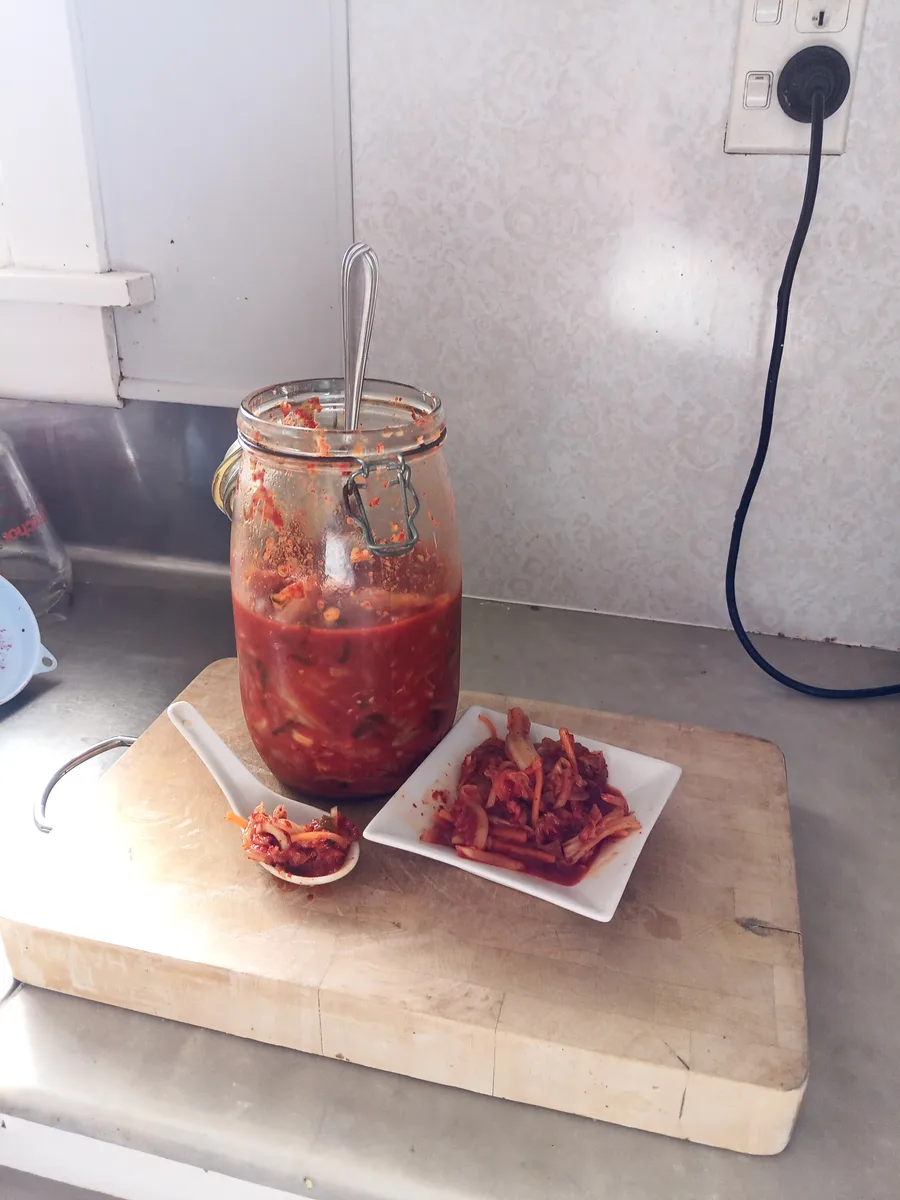
- Pack the jar. Push the coated cabbage into the jar or crock, pressing as you go so liquid rises above the solids with no big air pockets. Leave about an inch of headspace for the gas fermentation produces.
- Ferment on the counter. Cover loosely (a lid set on without sealing, or a cloth and rubber band) and leave at room temperature for 1-5 days, pressing down daily to keep everything submerged.
How to Tell It’s Done

Taste it starting on day 1 or 2. A warm kitchen can reach a pleasant tang in 24-48 hours; a cooler room takes closer to 4-5 days. There’s no fixed number of days that’s right for every kitchen, taste is the clock. Once it tastes the way you want it, move it to the fridge, seal the lid tight, and it’ll keep developing flavor more slowly from there.
Storage
Once it’s fridge-cold, a well-sealed jar or crock keeps for several weeks, getting more sour as it ages. If fridge space is genuinely tight (a shared apartment fridge with no room to spare for a half-gallon container), the kimchi in a jar guide covers a smaller quart-jar batch sized for exactly that situation, along with smell management this recipe doesn’t need to cover.
FAQ
Can I make kimchi without fish sauce?
Yes. Swap in soy sauce, or rice vinegar with a pinch of sugar. It changes the flavor slightly, not the safety or the fermentation.
How spicy is this recipe?
Adjustable. The 4-6 tablespoons in the ingredient list gives a moderate heat across a whole-cabbage batch, cut back to 2-3 tablespoons for something milder, or use hot paprika instead of cayenne in the substitute mix for less heat with the same color.
How long does kimchi keep?
Several weeks in the fridge once sealed, getting more sour over time rather than spoiling outright. If a batch ever smells off in a way that seems wrong rather than just sour, the fermentation troubleshooting guide covers what’s normal and what isn’t.
Is kimchi the same as sauerkraut?
Same core method, salted cabbage fermented by naturally occurring lactobacillus, different seasoning. If you can make sauerkraut, you already have the skill this recipe builds on.
One cabbage, ingredients you can substitute your way around, and a taste test in a day or two. If this saved you from being intimidated out of trying kimchi, send it to someone who’s been putting it off.