Banana Peel Fertilizer: Does It Work, and What to Do With the Peel Instead
Does Banana Peel Fertilizer Work?
Probably not much, but not for the reason most pages give you. You’ll see banana peel tea compared against commercial fertilizer by potassium concentration, usually something like “50-200 ppm versus 3,000-5,000 ppm.” Neither number in that comparison holds up. The commercial figure describes fertilizer concentrate straight from the bottle, never applied at that strength; a real liquid feed mixed to its own label instructions lands closer to 250-350 ppm. The peel-tea figure is worse: nobody has published a measurement of it at all. What’s known: the peel itself is real potassium, and two independent horticultural sources who’ve looked at this closely both conclude the tea delivers little of it. Neither one puts a number on it, and neither should this page.

What’s in a Banana Peel?
This part is solid. Potassium is banana peel’s dominant mineral, measured at 9.39% of dry weight by Emaga et al. (2007, Food Chemistry), a genuine peer-reviewed study of banana and plantain peel composition. The peel is not a myth; it’s real potassium-rich material. The open question isn’t whether the potassium is there. It’s how much of it a plain-water soak pulls out, which is where the tea claim runs into trouble.
Banana Peel Water (the “Tea”): Why It Delivers So Little
The common method: chop or soak a peel in water for a day or two, then water your plant with the liquid. Search for how much potassium that delivers and you’ll find a number, usually “50 to 200 ppm,” repeated across a lot of gardening sites. Trace any of those pages back to a lab report, a study, a dataset, anything, and the trail goes cold. Every source repeating the figure appears to be citing another source repeating it, not an original measurement.
What’s real instead: Robert Pavlis, a science-background horticultural writer who specializes in testing garden claims (gardenmyths.com), calculates the peel’s own nutrient content and concludes the tea “might add some potassium, but not much else,” warning readers not to “get conned by tea claims for plants.” A Cooperative Extension response (Ask Extension, 19 June 2023) reaches the same place from a different angle: banana peel tea is “probably not very effective,” and “a well-balanced commercially available organic fertilizer would be a better bet.” Two independent, named, real sources agree it’s weak. Neither one, or anyone else checked here, has a number for exactly how weak.
The mechanism explains why, even without a precise figure: most of a peel’s potassium is bound inside intact plant cell walls, and a short soak in plain water doesn’t break that structure down. The soak makes lightly potassium-flavored sugar water, not a concentrated feed.
Still finding your feet with growing in small spaces? The free guide covers the basics this page builds on. It doesn’t cover fertilizer, but it’s the place to start if pots and windowsills are new to you.
Burying Peels in the Pot: What Happens Instead
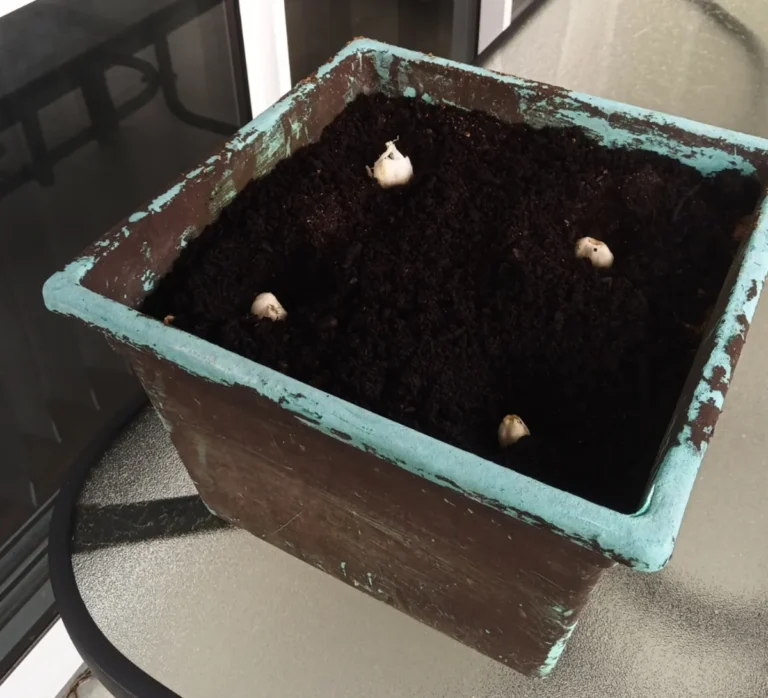
Burying a whole or chopped peel directly in a container’s soil doesn’t solve the release problem, it just moves it underground and adds two new ones. The peel still has to physically break down before any nutrient reaches the roots, which takes weeks, not days, in a pot’s smaller, generally cooler conditions than an outdoor compost pile. In the meantime, a decomposing peel sitting in damp potting mix is exactly the kind of organic matter that draws fungus gnats and encourages mold, particularly indoors or on a balcony where airflow is limited. If that’s already a problem for you, see what buried food scraps attract.
Drying and Grinding Peels: The One Version That Changes the Math
The one method that meaningfully changes the release problem is drying peels fully, then grinding them to a powder before working them into soil. Grinding physically breaks down the cell structure the whole-peel and tea methods leave intact, which is the real bottleneck. Eggshells work the same way, for the same reason: it’s particle size, not the material itself, that decides whether grinding does anything. It’s more effort than most people are willing to put in for a home fertilizer, but it’s the version that’s honestly doing something the tea and burying methods mostly aren’t.
Compost the Peel Instead
This is the real answer for almost everyone. Composting breaks the peel down properly over time, through the same biological process that unlocks nutrients from any plant matter, and it does it without you needing a dehydrator or a grinder. Banana peels are genuinely good compost feedstock. This isn’t a consolation prize, it’s the correct use for the material.
If you’re composting in an apartment, how to compost in an apartment covers the methods (including bokashi, which handles peels and other kitchen scraps without a yard). If you’re running a worm bin instead, vermicomposting for beginners covers feeding rates and what worms do and don’t want. Either route gets more real value out of a peel than tea or burying it ever will.
Banana Peels and Eggshells Together: Does It Add Up?
Peels and eggshells get recommended as a combined fertilizer fairly often, on the logic that if one gives potassium and the other gives calcium, doing both must cover more ground. It doesn’t really change the picture: each material has its own release problem, and combining two slow, poorly-measured ingredients doesn’t multiply into one fast, reliable one. Compost both, for the same reason as above.
What to Feed a Container Plant With a Real Potassium Shortfall
If a plant needs more potassium, particularly a fruiting crop like a tomato or pepper heading into flowering, a proper liquid feed mixed to its own label instructions delivers a documented, repeatable concentration (roughly 200-350 ppm at typical label rates, not guessed at). How much to feed a plant in a pot covers dosing, frequency and how to tell if a plant is underfed in the first place.
FAQ
Is banana peel fertilizer a myth?
Not entirely, but the specific comparison you’ve probably seen (“50 vs 3,000 ppm”) is built on two numbers that don’t hold up: the commercial figure is undiluted concentrate, and the peel-tea figure has never been measured by anyone. What’s known: the peel is real potassium, and two independent horticultural sources agree the tea delivers little of it, even without a precise number.
How much potassium does banana peel tea contain?
Nobody has published a real measurement. Figures like “50-200 ppm” appear across gardening sites with no traceable source behind them. The honest answer is: some, probably not much, unmeasured.
Can banana peels harm my plants?
Not directly, but a buried, decomposing peel in a pot can attract fungus gnats and mold before it fully breaks down, which is a real downside indoors.
Should I still put banana peels in my compost?
Yes. This is the genuinely correct use for them, and it costs nothing extra if you’re already composting kitchen scraps.
The Next Small Step
If the honest answer for your peels is a worm bin, The Hidden Compost System (US$16.97) is a 30-day guide to a first working apartment worm bin, without the smell or the bugs.